Sailing to Greenland: An Arctic Sailing Expedition Starting from Scratch
Loni Dupre is a world-renowned Arctic explorer with a deep and enduring passion for Greenland. Now, he is embarking on a brand-new expedition to the Far North with his expedition partner, Pascal Marceau—and this time, they are determined to step completely outside their comfort zone.
Dupre first set foot on Greenland in 1997, when he and John Holscher became among the first to circumnavigate the island by kayak and dog sled. In 2022, he returned to Greenland with Marceau, once again venturing deep into the Arctic by dog sled to document the impact of climate change on Inuit communities.
But after that journey, a new dream quietly took root in his heart. The legendary explorers he admired—Robert Peary, Ernest Shackleton, Robert Falcon Scott, and others—all set sail on ships to explore the seas. Their great expeditions were inextricably linked to vessels. Dupre also yearned to experience such a journey firsthand: to sail to Greenland in his own boat and circumnavigate the island.
But he faced two enormous challenges: he had no boat and absolutely no sailing experience. Although he had twice reached the North Pole by dog sled from Canada, completed the first solo winter ascent of Denali, and achieved the feat of crossing the Northwest Passage from west to east in winter, sailing remained a completely unknown and uncharted territory for him.
“One day, Lonnie suddenly said, ‘I’m going to buy a boat.’” Marseau recalled in an interview with GearJunkie, “I was stunned. I thought, ‘What? Why is he saying this out of the blue?’”
Marso herself is a scientist and an experienced polar explorer. But like Dupre, she previously knew nothing about sailing. Yet curiosity ultimately overcame her reservations, and she accepted the challenge, diving headfirst into this new realm alongside Dupre.
Both admit that the learning process was exceptionally difficult. Not only did they have to learn to sail from scratch, but they also had to completely rethink their approach to gear. The preparations for an Arctic voyage were completely different from the expedition models they were familiar with, such as dog sledding, kayaking, and mountaineering.
GearJunkie interviewed the pair midway through their Greenland sailing expedition, hearing them recount the scientific mission of the trip, the myriad challenges they faced, an indispensable small wood-burning stove, and the essential gear that accompanied them along the way.
Sailing to Greenland: A Mission-Driven Voyage
Dupre and Marso’s voyage to Greenland is not merely about adventure and curiosity. They are collaborating with Sea-Watch to collect scientific data on marine life, glacial melt, and the impacts of climate change. Using maps provided by the organization’s founder, the pair are surveying puffin populations to document how the number and distribution of puffin habitats have changed since the 1980s.
“It’s like a treasure hunt,” Marso described it.
During the voyage, they will also record sightings of marine mammals such as belugas, orcas, narwhals, and other cetaceans.
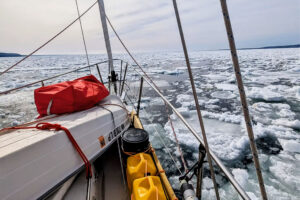
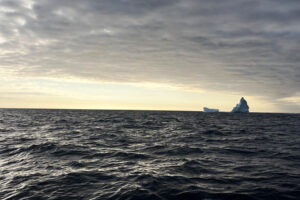
On March 31, 2025, they set sail from Grand Marais on the shores of Lake Superior aboard the Nord Hus. The lake was still covered in ice, and the icy water splashed up, freezing into ice on the deck and rigging. The fleet crossed the Great Lakes, entered the St. Lawrence River, and finally headed out into the vast Atlantic Ocean. Dupré, Marceau, and the other crew members took turns at the helm, remaining constantly vigilant and doing their utmost to stay warm and dry. Fortunately, they were well-equipped to handle the harsh conditions they encountered along the way.
Sailing to Greenland: A Mission-Driven Voyage
Dupré and Marso’s voyage to Greenland is not merely an adventure in search of the unknown. They are collaborating with Sea-Watch to collect scientific data on marine life, glacial melt, and the impacts of climate change. Using maps provided by the organization’s founder, the pair are surveying puffin populations to document how the number and distribution of puffin habitats have changed since the 1980s.
“It’s like a treasure hunt,” Marso describes it.
During the voyage, they will also record sightings of marine mammals such as belugas, orcas, narwhals, and other cetaceans.
On March 31, 2025, they set sail from Grand Marais on the shores of Lake Superior aboard the Nord Hus. The lake was still covered in ice, and the icy water splashed up, freezing into ice on the deck and rigging. The fleet crossed the Great Lakes, entered the St. Lawrence River, and finally headed out into the vast Atlantic Ocean. Dupré, Marceau, and the other crew members took turns at the helm, remaining constantly vigilant and doing their utmost to stay warm and dry. Fortunately, they were well-equipped to handle the harsh conditions they encountered along the way.
Arctic Sailing Expedition: A Completely Different Approach to Preparation
In the past, when Dupre and Marso prepared for expeditions, their destinations were typically the dry, frigid Arctic tundra or high-altitude mountain peaks. They had to strictly limit the space in their backpacks, discard non-essential items, and constantly balance practicality with weight reduction.
But on a boat, these constraints disappear. They can bring “luxuries” like pressure cookers and don’t have to huddle in cramped nylon tents.
Dupre says his top priority on this trip is managing humidity.
“We do everything we can to avoid hypothermia, but on an Arctic voyage, the risk of hypothermia is ever-present… I have to stay dry at all times.” High humidity, splashing waves, and nearly constant rain make staying dry exceptionally difficult. To combat this, two pieces of equipment played a decisive role during the journey, the first being a simple wood-burning stove.
“I specifically had a wood-burning stove installed on the boat,” Dupré said. He admitted that the installation process was no easy feat, but both explorers agreed it was the most important piece of equipment they brought aboard. “After standing watch on deck for four or five hours, the radiant heat warms you right through and helps dispel moisture on the boat.”
This was crucial because they often had to air-dry their clothes below deck. Without this stove, clothes would almost never dry completely, leading to mold and other problems.
The second essential piece of gear is PrimaLoft synthetic insulation. Dupre has been a PrimaLoft-sponsored athlete for 25 years, so nearly all their clothing—including boots and blankets—incorporates this synthetic insulation. In the cold, damp conditions of the open ocean, where they spend long hours on deck, this insulation is nothing short of a lifesaver.
“The humidity is just too high; it feels like the clothes will never dry,” said Marso. The advantage of synthetic insulation is that it continues to provide reliable warmth even when wet.
The following items are PrimaLoft essentials that they would never have brought on previous polar expeditions but have become indispensable during this voyage:
Patagonia Nano Puff Vest
Dupré admits that as he gets older, maintaining his core body temperature has become increasingly difficult, making this insulated vest the item he wears most often.
Black Label PrimaLoft Lace-Up Boots
These rubber boots kept Dupre’s feet warm and dry throughout the journey, and Marso plans to pick up a pair for herself before heading home.
Mountain Equipment Alpamayo Jacket
Marso wore this jacket almost every day while working on deck, layering it under a waterproof shell. The brand no longer produces the women’s Alpamayo jacket, but you can find similar options in GearJunkie’s list of the best synthetic insulated jackets.
Rab Photon Insulated Pants
Whether facing extreme cold or simply relaxing comfortably in the cabin, these pants were a must-have for Dupre.
Helly Hansen Crew Jacket
A standard raincoat was far from sufficient for this voyage; Marso wore this professional sailing jacket throughout his watch shifts.
Grundén Waterproof Pants
Dupré still keeps the Grundén waterproof pants he bought during his early days working on fishing boats, and he says they’ve proven just as practical on this Arctic voyage.
LLBean Ultraplush PrimaLoft Blanket
While this kind of item wouldn’t typically be found on a dog sled or high-altitude expedition, the comfort provided by a warm blanket is essential during a voyage involving long hours on deck.
Crucial.
The Centerpiece: The Nord Hus
The largest and most essential piece of equipment throughout the entire journey was undoubtedly their vessel—the Nord Hus. This 36-foot blue-water monohull, designed by Brent Swin, was built in 1999.
Dupré purchased the boat in the fall of 2021, choosing it for clear reasons: its compact hull requires only one or two people to handle and can accommodate up to four; it has ample power to navigate between the Greenland coast and icebergs; and, most importantly, the hull itself possesses the insulation necessary for Arctic voyages.
After shipping the boat from Seattle to Damare, the pair began a comprehensive refit. They refinished the hull and named it “Nord Hus,” meaning “Northern House.” They then installed a lighter, custom-made mast; added a custom aluminum sprayhood with tinted glass windows; updated the rigging and sails; upgraded the entire electrical system; and added a composting toilet, a new galley area, and a roll-up canopy. Dupre also managed to install that all-important wood-burning stove.
The entire restoration took three years and cost approximately $160,000. By the time they officially set sail in March 2025, they already knew the boat inside and out.
“We practically rebuilt the entire boat; we’ve worked on every inch of the structure and every wire, so we know it better than anyone,” Pascal said.
Phase Two of the Expedition: Deep into the High-Latitude Arctic
This Greenland sailing expedition is divided into two phases. The first phase primarily involved navigating the Great Lakes region, dealing with pack ice and complex sea conditions, safely reaching Greenland, and resolving the issue of scarce docking facilities there.
“You don’t realize what a real challenge it is to haul a boat ashore in Greenland until you try it,” said Marso. “There are almost no supporting facilities here, and locals rarely do this kind of thing.”
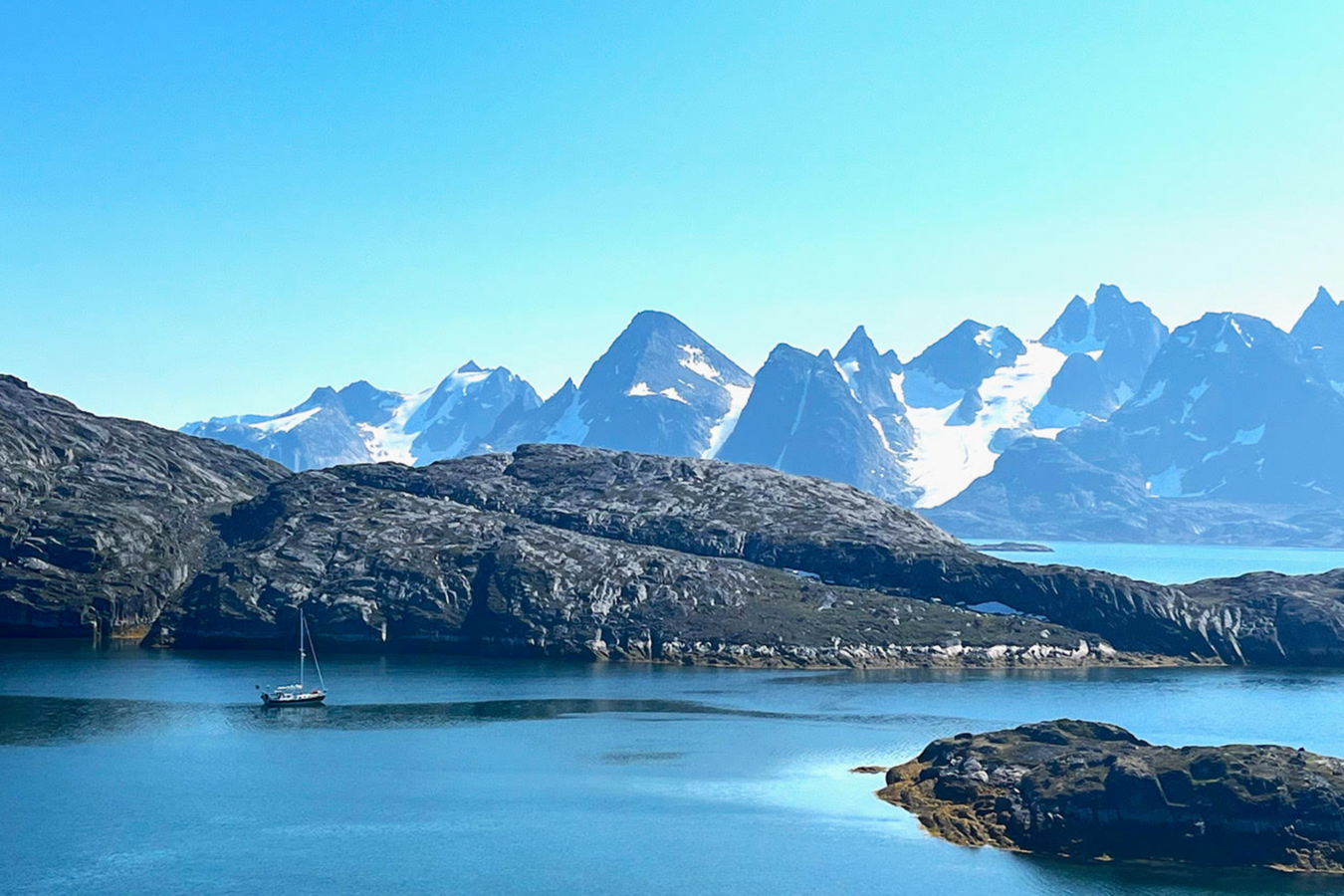
Currently, the Nord Hus is moored in the village of Aasiat on the southwest coast of Greenland, in Disko Bay. The two plan to return to this location and then continue north along the coast into the high-latitude Arctic region to conduct as many scientific and environmental observations as possible, including collecting DNA samples for analysis.
Nearly 30 years have passed since Dupre first set foot on this land, and he is deeply shocked by the changes he sees before him.
“The changes I’ve observed are very significant,” ” he said. Dupre anticipates that as they embark on the second phase of their journey in the summer of 2026, they will witness even more dramatic environmental changes. The pair plans to set sail again on June 15, 2026, continuing their voyage aboard the Nord Hus until the third week of October.
Dupre once dreamed of sailing to the remote corners of the world like the exploration heroes he admired, and now that dream has come true. Moreover, he is sailing in pursuit of noble scientific exploration in one of his favorite places on Earth.
“The beauty here is breathtaking. The rugged coastline, intertwined with glaciers and icebergs—every scene is unforgettable,” Dupree said. “I think that’s also why I never grew tired of it nearly 30 years ago when John Holsher and I sailed around the island.”