Text—Malcolm Johnson
The creative process is rarely smooth sailing or straightforward.
More often than not, it is chaotic, unpredictable, and turbulent—much like the Big Bang, that initial burst of creativity that still echoes throughout the universe today. So it comes as no surprise that when Ben Stuglevsky and Ben Moon set out to make a film about the wellsprings of creative expression in the outdoors, they encountered their fair share of chaos and struggle. But while filming *The Theory of Creation* with Pete DeVries, Elena Haite, Robin Van King, and Grieve Washburn of the band Goth Babies—amid some of the harshest natural environments on Earth—they realized, as Grieve put it, that there is a beauty inherent in the creative process itself, even amidst the chaos. Ahead of the film’s release, we sat down with the two filmmakers to delve deeper into the story behind it.
The concept of *Theory of Creation* is quite grand, linking vast cosmic processes to our personal creative journeys. How did this idea come about?
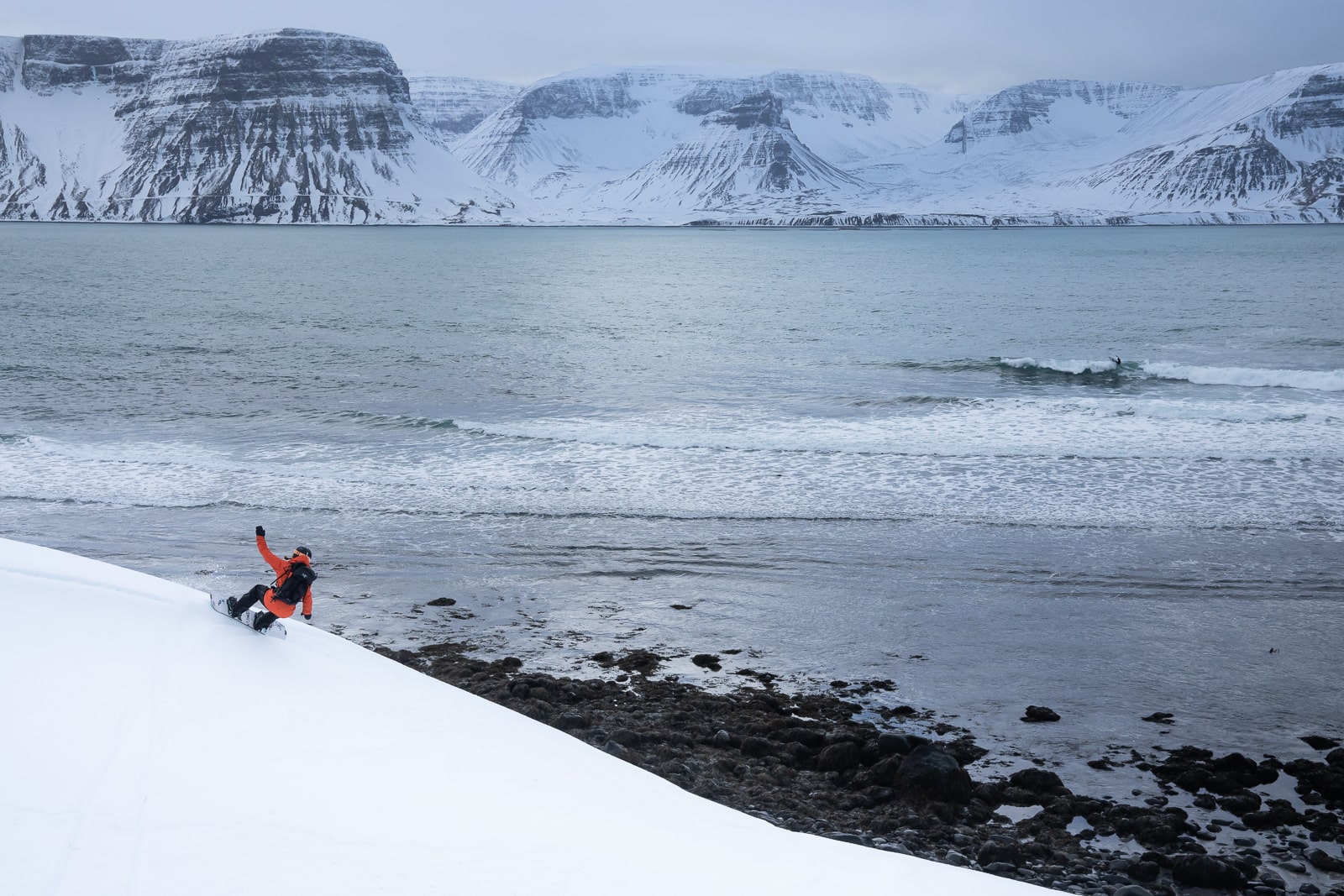
Sturgeon: Over the past few years, I’ve been fascinated by physics and have been studying gravitational waves—how they reverberate and propagate through the universe. Later, as a filmmaker, I became interested in the similarities between moments of creation on a macro level and those on a human, micro level—like writing a song, or observing a wave or a mountain, and finding a thread within them. These are acts of creation in and of themselves. At the same time, Justin Sweeney of Arc’teryx came up with the idea of making a film about the connections between surfing, snowboarding, and music. That was the true starting point of my concept—how to trace back from the Big Bang to the source of the human creative spark. Iceland is the ideal place to explore this theme—it is raw and powerful, and to this day, it continues to give birth to new life in the ocean.
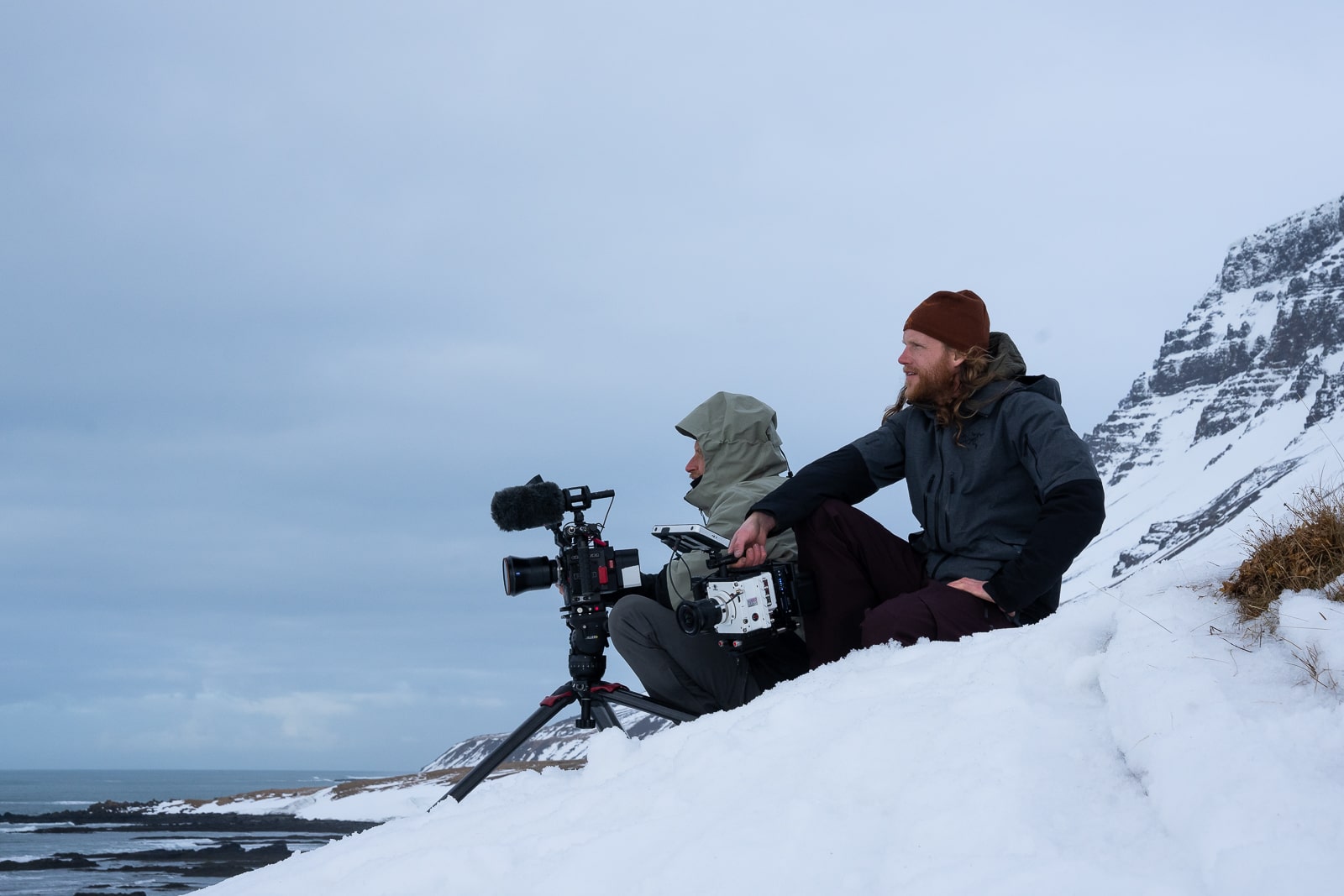
Moon: I’ve spent a lot of time thinking about where creativity truly comes from and how it can be awakened. For me, the key is finding a space where I can completely open myself up—in a sense, entering a state of flow. I often experience this while rock climbing: when you complete a route, you usually don’t realize how much effort you’ve put in; it just feels like everything happened effortlessly, flowing naturally.
Over the past decade, I’ve turned my attention more toward the ocean. It’s a more mysterious process: waves are bursts of energy born from the interplay of tides, sunlight, wind, and countless other factors—ultimately, the universe brewing a storm that stretches for thousands of miles.
Another reason I’m particularly fascinated by this subject is the long-standing rapport I share with Griff. We met while surfing in Oregon, chatting out in the water, and later collaborated on a film. His music places great emphasis on experience and a sense of place, and he’s particularly skilled at capturing the vivid essence of a “first encounter.” So I wanted to use this opportunity to explore where his inspiration comes from and how his creativity evolves when he steps into a place he’s never experienced before. As Sturges said, that place is raw and awe-inspiring. Simply being there, feeling those tangible and intangible forces, and reflecting on our connection to them is beautiful in itself.
On set, did the film’s concept spark conversations that wouldn’t normally happen? Sturges: Absolutely. I wanted to share some physics concepts I’d been studying, though I wasn’t sure if the athletes would be interested. It turned out Robin, Pete, and Elena were all incredibly engaged. As creators in their own fields, they were open to discussion and willing to explain complex ideas in more accessible terms. Everyone is used to being deeply involved in the creative process, which made it easier for them to grasp these scientific concepts. Of course, there were parts they didn’t quite grasp—they probably thought I was a bit crazy. (Laughs)
Moon: Griff was just as sincere. I was listening in on the interview on set, and he was incredibly open. He’s only in his early twenties, yet he shared his experiences without holding anything back. I knew he was capable of that, but after everything that happened before filming, I wasn’t sure he’d still be willing to open up like that.
On set, did the film’s theme spark any conversations that wouldn’t normally come up?
Stetch: Absolutely. I originally wanted to talk to everyone about some physics concepts I’ve been studying, and I was worried the athletes might not be interested in that kind of discussion. But to my surprise, Robin, Pete, and Elena were all really into it. They’re creators in their own fields, so they’re eager to exchange ideas and try to understand and express things in more accessible ways. Everyone is used to being deeply involved in the creative process, which made it easier for them to embrace these scientific theories. Of course, when there were parts they didn’t understand, they probably thought I was a bit of a weirdo. (Laughs)
Moon: Grieve was just as open and uninhibited. I was sitting right there listening in on the interview, and he was incredibly sincere. He’s only in his early twenties, yet he shared his experiences without holding anything back. I knew he was capable of it, but after everything that happened leading up to the shoot, I wasn’t actually sure he’d still be willing to open up so honestly.

Whether we’re creating music, making films, immersing ourselves in nature, or engaging in the sports we love, most of us are seeking a connection with forces that are greater and more profound—a connection that can only be truly understood through personal experience. Yet at the same time, life’s various hardships often stand in our way. From what you’ve described, even when facing nothing more than wind and snow or heading to the coast, the journey of creating *Creation Theory* was equally fraught with difficulties.
Sturgeon: That’s true; the entire filming process was exceptionally difficult. Initially, we planned to set out together, but just two days before departure, a fire unexpectedly destroyed Grieve’s cabin. Fortunately, no one was inside, but a vast collection of musical works and personal belongings went up in flames. At first, he said, “It’s okay, I’m still going,” but a few days later he called to say he couldn’t make the trip and needed to get his life back on track first. The connection between sports and music is the very core of the entire story, so at that moment we were all at a loss, unsure of how to proceed.
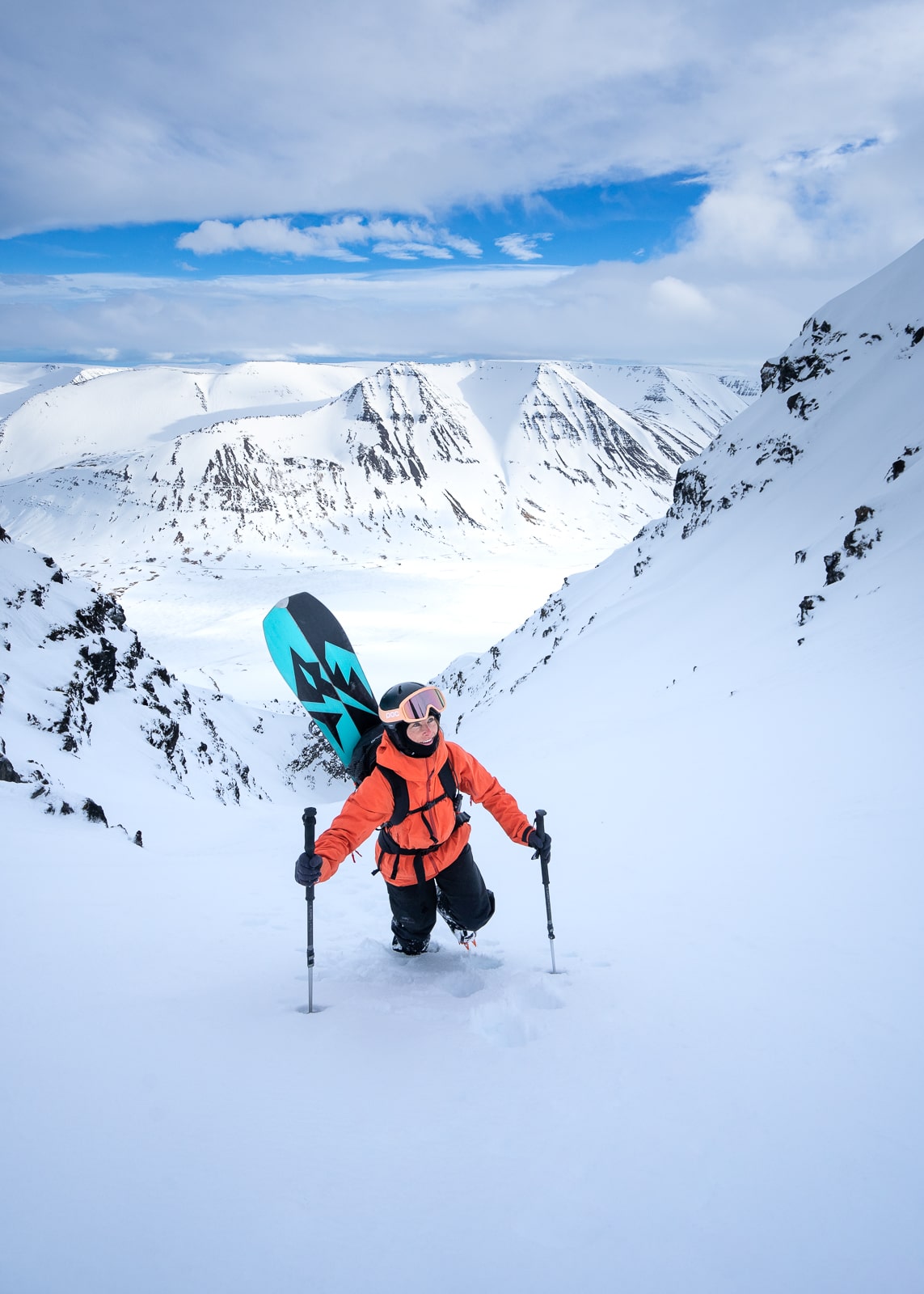
After discussing it with everyone, we decided to go surfing and skiing first, and then plan a separate trip with Grief a few weeks later. But throughout the entire experience, we were under immense mental strain and found it physically quite taxing—Iceland’s winters usually offer excellent snow conditions with deep snowpack, but on the day we arrived, it poured with rain, and we never saw good snow again after that.
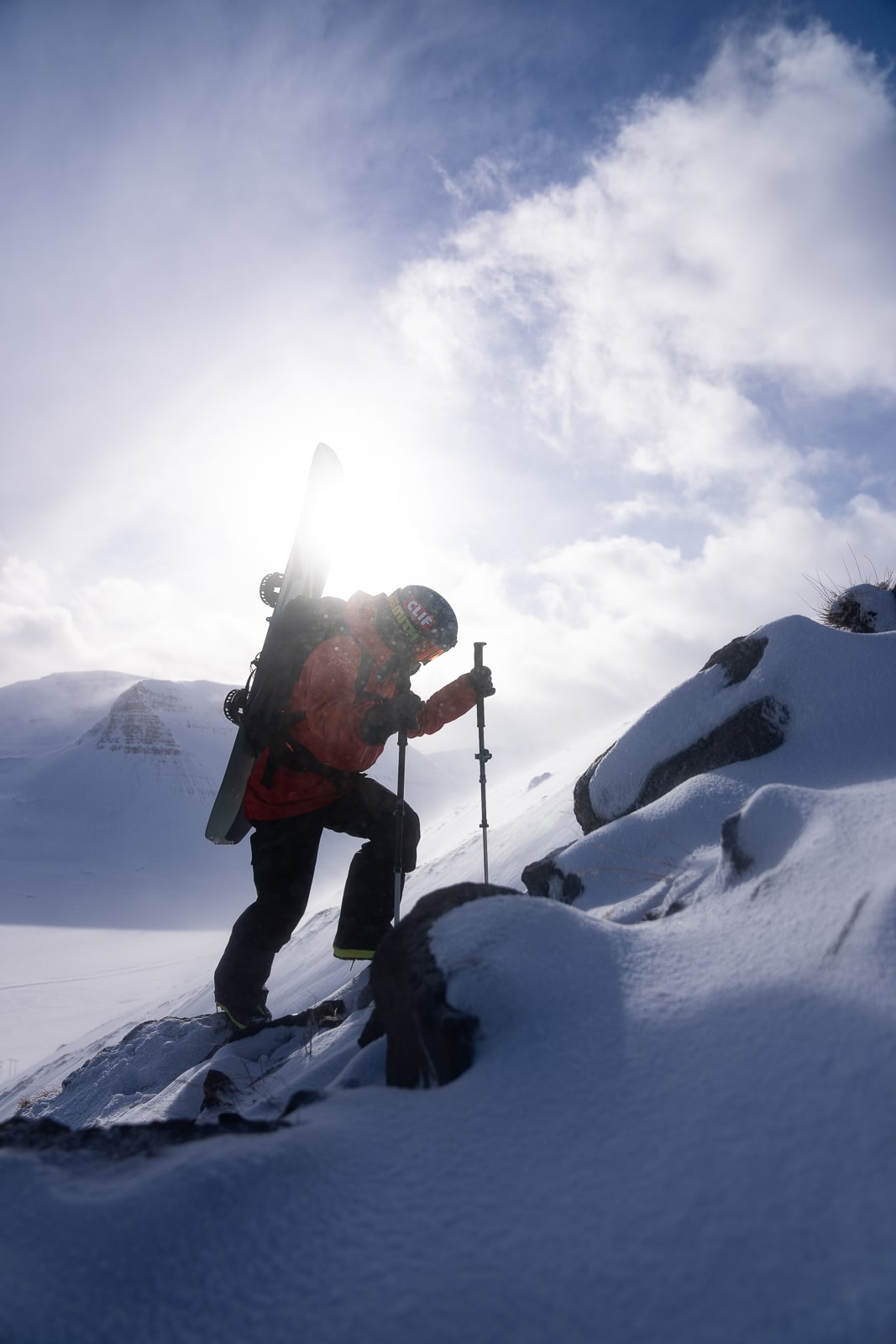
We ended up going camping in the mountains after all, and it was a total disaster. The next day, we tried skiing, but after about 500 meters, the wind blew everything off our backs. I was really worried that Elena would be blown down the mountain, so we had no choice but to turn back to the tent and play cards all day.
It was like that for almost the entire three weeks. The weather looked promising, but as soon as we climbed to the summit, we’d get trapped in a blinding whiteout. We also had plenty of equipment issues—the wind knocked over a tripod, snapped a lens, smashed a monitor, and a small drone suddenly did a backflip and crashed. Our gear kept getting whittled down until, by the end, we had almost nothing left to work with. But later, when we did a second shoot with Grieve, everything was absolutely perfect—the sun was shining, and the atmosphere was relaxed and cheerful.
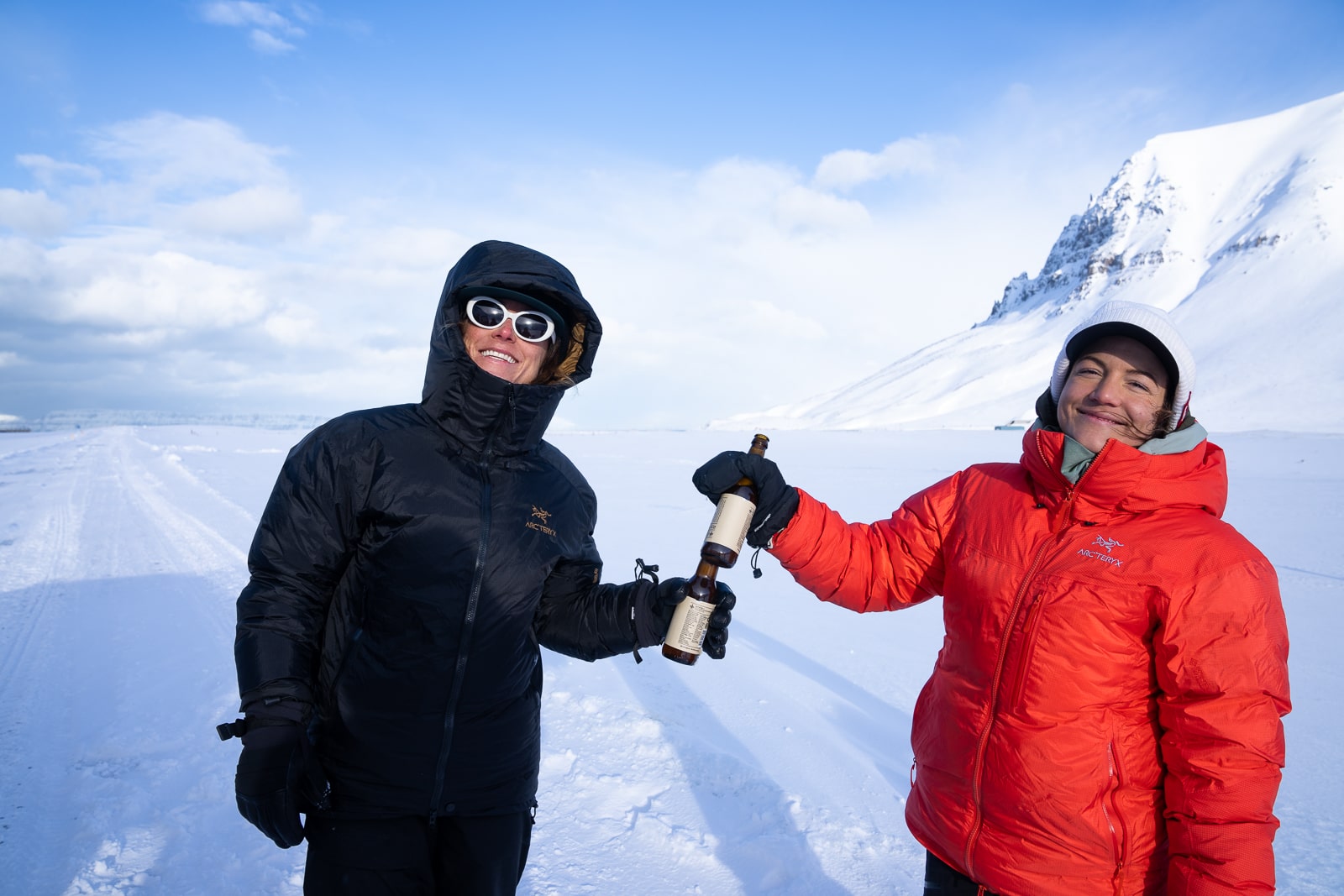
Moon: That’s right, but the process was far more difficult than it looked. I remember checking the water temperature data at the time—most of the filming areas were only 34 degrees Fahrenheit (about 1 degree Celsius)—and I was still sitting right by the stream to shoot. On top of the bone-chilling cold water, there was the constant flow of melting snow; I could only last about an hour before I started shaking uncontrollably. But the moment that terrified me the most was when a sudden, violent storm hit while I was filming in the water—I couldn’t see the shore, I couldn’t see Pete, and all my points of reference vanished. That was probably one of the loneliest moments of my life.
One last question: While making a film that explores the origins of all things and the essence of creation, what new insights did you gain about your own creative process?
Sturges: For me, this experience was more like a profound confirmation. Creation is bound to involve mistakes and chaos, but you can make the most of whatever you have at hand and amplify the precious, positive elements. The process of making this film was exactly like the creative philosophy we wanted to convey: you’ll encounter all kinds of setbacks, you have to be patient, and you have to give it time. As long as you keep going, you’ll always find a way out.
Moon: Another crucial point is that you have to step out of your comfort zone. When dealing with something as elusive as creativity, you must learn to adapt and go with the flow—it’s often in those moments that you stumble upon unexpected surprises. I often tell new creators: Stay open-minded, because opportunities may not present themselves exactly as you expect. When you launch a project like this, you have absolutely no idea how it will turn out; at one point, we even thought this might end in complete failure.